



Clothing manufacturers for startups should be selected by the product proof a brand has today, not by the factory scale it hopes to need later. An unvalidated graphic idea, a repeat-selling catalog garment, and a proprietary fashion product require different production models. Starting with the deepest customization can consume cash and attention before the buyer knows which feature customers value.
The practical sequence is staged. Use samples and print on demand when demand and artwork are uncertain. Compare small-batch or bulk customization when sales, size mix, and reorder needs become stable. Move into deeper garment manufacturing when fabric, fit, pattern, or construction is a verified part of the product advantage. Each step should solve a specific limitation rather than serve as a badge of brand maturity.
Which Production Model Fits an Unvalidated Startup?
An unvalidated startup normally needs the lowest-commitment model that can test the real product promise. For a graphic-led brand, this may be a defined catalog garment with a sample and POD or a very small controlled batch. For a construction-led label, it may still require product development, but the founder should narrow the first style and test assumptions before funding a broad range.
Test the complete offer rather than the mockup
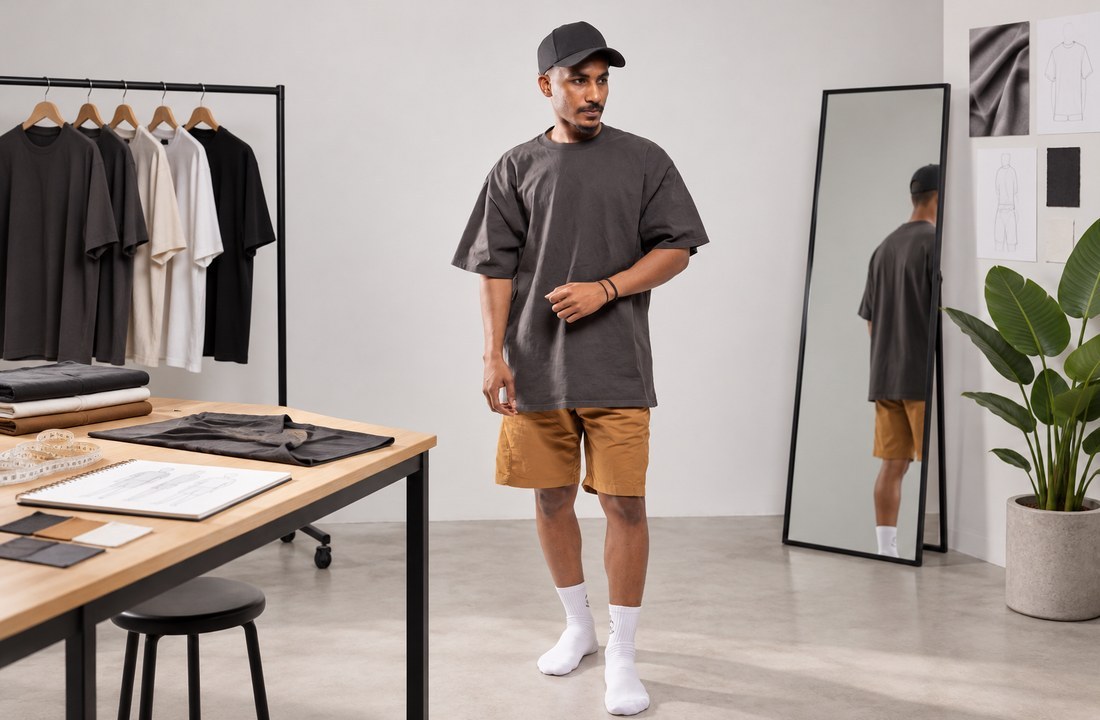
A digital design does not test garment fit, color, decoration feel, label accuracy, packaging, delivery, or customer support. Order the same route a customer will receive. Wear and wash the sample, photograph the real product, and verify variant mapping and parcel information before driving traffic.
Shopify describes print on demand as production triggered after a customer order, which can reduce the need to hold decorated inventory. That advantage comes with boundaries: the brand generally selects from listed products and methods, and availability or unit economics may not support every stage of growth.
Cloprod’s print-on-demand T-shirt guide can help a graphic-led startup understand a catalog-and-decoration route. Use it alongside a current product sample and written project confirmation. It is not evidence that every concept should begin with a T-shirt or that POD supports proprietary garment construction.
Set validation questions before launch
Decide what the first release must learn: whether people will pay the planned price, which design earns orders, how sizes distribute, why returns occur, and whether the service route meets delivery expectations. Select a product and campaign that can answer those questions without introducing too many colors, fits, and decoration methods at once.
Do not use likes, sign-ups, or search interest as direct substitutes for paid orders. They can signal attention, but inventory decisions need evidence closer to the transaction. Document customer feedback and operational failures separately so a popular design does not hide an unsuitable garment or weak fulfillment route.
Validation also needs a time boundary. A handful of orders from friends or a single event may prove that the checkout and product exist, but not that demand will repeat. State what result would justify the next commitment and what result would cause the startup to revise or stop. This keeps a test from becoming permanent low-volume activity with no decision attached.
When Should a Startup Consider Small Batch or Bulk?
A startup should consider small batch or bulk when it has repeatable demand, a credible size-and-color allocation, acceptable return reasons, and enough cash and operating capacity to own inventory. Lower unit production cost is not enough. The brand must be able to receive, inspect, store, sell, pick, pack, and clear the stock without damaging the business.

Compare total economics at the same volume
For POD, include product, decoration, labels or packaging, platform charges, fulfillment, parcel shipping, payment timing, replacements, and customer service. For stock, include sample and setup, production, freight, duties where applicable, inspection, receiving, storage, pick and pack, shipping materials, shrinkage, returns, markdowns, and cash tied up before sale.
The Cloprod pricing page provides current listed references for its available products and options. A startup should request a project total for the selected garment, artwork, quantity, branding, and destination rather than building its margin from a visible base price alone.
Use the following stage comparison as a decision aid, not a guarantee.
| Stage | Appropriate route | Evidence needed | Main risk | Stop condition |
|---|---|---|---|---|
| Demand unproven | Sample plus POD or controlled test | Real product, paid orders, return reasons | Weak economics or limited product control | Customers reject price, fit, or delivery |
| Demand becoming stable | Small batch or hybrid | Repeat sales, size mix, landed-cost model | Forecast and inventory error | Stock cannot clear without discounting |
| Product advantage proven | Deeper custom development | Verified need for unique fabric, fit, or construction | Development and material commitment | Difference is not valued by customers |
| Reorder operation established | Planned replenishment | Versioned specification and stock signals | Drift between runs | Supplier cannot reproduce approved product |
A hybrid route can keep uncertain graphics on demand while stocking an evergreen product. It only works if the customer-facing differences are controlled. If the bulk product changes fabric, fit, print, or labels, update the listing and do not ship two versions under one promise without disclosure.
Inventory ownership requires an exit plan. Before buying, decide how long each SKU can remain at full price, what markdown or secondary channel is acceptable, and when no further reorder will be placed. Include storage and disposal consequences. The plan may be uncomfortable, but it exposes how much risk the lower unit quote actually transfers to the startup.
When Is Custom Garment Development Justified?
Custom garment development is justified when a specific fabric, fit, pattern, wash, trim, or construction feature is essential to the offer and cannot be achieved through existing products. The brand should have evidence that the difference matters and enough resources to manage technical decisions, samples, testing, production, inventory, and quality control.
Convert differentiation into specifications
“Premium streetwear” is not a development brief. Define the silhouette through measurements and fit references, the material through composition and performance needs, the construction through drawings and seam details, and the finish through approved physical standards. Mark open decisions and identify who will resolve them.
Shopify’s clothing store production guide separates cut-and-sew, private-label blocks, POD, and dropshipping and recommends tech packs, samples, and production planning. The decision for a startup is whether it can supply or develop the inputs its chosen route requires.
Full-package manufacturing, cut-make-trim, private label, custom apparel, and POD are not interchangeable. Ask who develops patterns, sources fabric, owns minimum material commitments, grades sizes, tests the garment, applies decoration, packs orders, and ships them. Cloprod should be considered only for its documented catalog, customization, POD, and bulk paths, not represented as an OEM or full-package cut-and-sew factory.
Start with one learning-dense product
A narrow first development reduces the number of interacting variables. One core silhouette in a controlled color and size plan can test more than a collection of unrelated garments because the team can focus on fit, fabric, finishing, customer response, and reorder accuracy.
Avoid spreading a limited sample budget across many styles that never reach production-representative approval. If the brand cannot explain why each custom feature is needed or how it will be tested, delay that feature. Development should reduce uncertainty before it increases product range.
Keep product development separate from launch marketing. A promised date should not force the team to approve a sample that still fails fit, color, or construction. Build content and campaign milestones around evidence gates, and maintain an alternative launch product or date. The cost of delaying a campaign can be lower than receiving unsellable inventory.
How Should Startups Evaluate Manufacturer Fit?
Startups should evaluate fit between the project and the manufacturer’s operating model, product specialization, minimum commitments, sample process, communication, quality controls, and commercial terms. A large reputable factory can still be the wrong choice for a small complex order, while a responsive supplier can still be wrong if it lacks the needed construction or documentation.
Send a complete but focused request
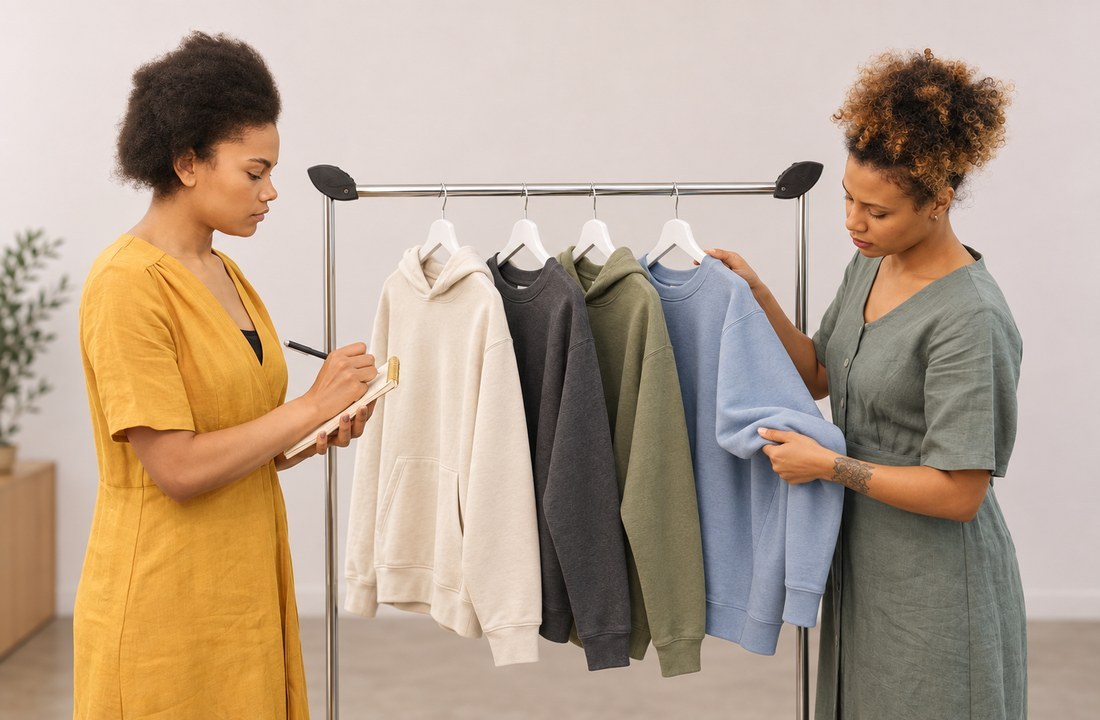
Provide product category, drawings or selected SKU, measurements, fabric or performance needs, artwork, decoration, colors, size allocation, labels, packaging, quantity, destination, required date, and expected reorder path. Ask the supplier to state assumptions, outsourced processes, minimums by style and color, sample stages, test options, inspection, payment terms, freight basis, and change rules.
The Cloprod custom apparel page documents listed printing, embroidery, and branding options. It can support a conversation when a startup’s needs match those services. The buyer should still confirm method suitability for the selected product and avoid inferring unlisted pattern or manufacturing capabilities.
Inspect the sample as a specification. Measure it, wear it, wash it under an agreed method, and review construction, color, decoration, labels, and packaging. CottonWorks explains that fibers, yarns, fabric construction, appearance, colorfastness, dimensional stability, and sampling conditions contribute to quality testing. Select checks according to the product rather than requesting a generic “quality certificate.”
Evaluate communication as production evidence
Good communication is specific. The supplier asks about missing measurements, challenges incompatible artwork, separates estimates from confirmed timing, and documents changes. Fast replies that avoid the difficult questions can create more risk than slower, precise answers.
Record versions and decisions in one channel or controlled project file. Verbal changes should be written back for confirmation. Before payment, ensure the legal entity, invoice, payment recipient, product specification, quantity, price inclusions, delivery basis, and remedies agree.
Startup status is not a reason to accept incomplete terms. If a supplier refuses to identify the product, document changes, provide a relevant sample, or explain the payment and delivery boundary, the buyer should stop. Flexibility can be valuable, but ambiguity often pushes the cost of mistakes toward the smaller party least able to absorb them.
How Can a Startup Scale Without Losing the Product?
A startup can scale without losing the product by preserving an approved specification, connecting inventory decisions to sales evidence, and treating every material or process change as a controlled decision. Growth should increase repeatability before it increases SKU count. Otherwise, revenue can grow while fit, shade, decoration, and customer experience drift.

Build a reorder record from the first run
Keep the exact SKU or tech pack, size chart and tolerances, fabric and color identity, construction details, artwork files, decoration settings, placement measurements, labels, packaging, care information, approved sample, tests, inspection findings, and accepted changes. Assign version numbers and dates.
For a catalog route, the Cloprod apparel catalog can identify current products, but the startup should still save the selected product code and confirm it before each reorder. A category page alone does not preserve a garment version.
Monitor sell-through by SKU, stock age, return reasons, defect reports, and contribution after fulfillment. Reorder when the evidence and replenishment timeline justify it, not when the warehouse simply looks low. Separate a stockout caused by under-ordering from one caused by an unexpected viral spike; the correct next order may differ.
Add complexity one variable at a time
New colors, washes, fabrics, suppliers, decoration methods, fulfillment locations, or package formats can each affect quality and operations. Change one or a small linked set, then sample and document the result. Launching all of them together makes failures difficult to diagnose.
If a startup moves from POD to bulk, compare the products side by side and update photography and descriptions where necessary. If it moves from an existing garment to custom production, treat that as a new product-development project with its own fit, care, quality, and compliance validation.
Capacity planning should include people as well as units. More stock creates receiving, counting, photography, merchandising, support, returns, and financial reconciliation work. A production partner may scale output without solving these internal constraints. Add volume only when the brand can control the product after it leaves production.
Protect working capital with approval-linked payments and a cash forecast that includes delays. A larger order can consume funds needed for marketing, freight, duties, replacements, or the next development cycle. Model a slower sales case and identify the point at which stock must be discounted. Obtain professional financial advice where the commitment is material.
Create a supplier transition file even when the relationship is healthy. Keep buyer-owned specifications, artwork, measurement data, approved colors, test results, product photography, inventory history, and customer feedback. This helps the startup compare future options and recover from discontinuation without asking a new partner to reconstruct the product from a sample alone.
Avoid dependent promises in the launch calendar. If an unapproved fabric, label, or sample controls production, do not advertise a fixed customer date as though the risk has closed. Publish timing only when the evidence supports it, or clearly sell on a preorder basis with transparent conditions. Urgency cannot substitute for a workable schedule.
Review the production model after each meaningful stage, not after every small fluctuation. The right question is whether the current route still delivers the required product, customer experience, economics, and learning. A temporary stockout may need a replenishment fix, while repeated fit limits may justify development. Diagnose the constraint before changing models.
Agree who owns customer communication when production slips. The supplier should report risks early, but the startup decides what customers are told, whether orders pause, and whether refunds or alternatives are offered. Build time for that decision into the schedule. Silence protects neither the launch nor the relationship.
At the end of each run, reconcile planned and actual units, costs, defects, returns, and timing. Record which assumptions were wrong and what will change. This review supplies the evidence for the next stage and prevents growth from being measured only by the number of garments ordered.
Assign an owner and date to every corrective action so lessons become operating changes rather than meeting notes.
Conclusion
Clothing manufacturers for startups should match the next evidence-building stage, not an imagined future scale. Use a real sample and low-commitment route to validate uncertain demand. Consider small batch or bulk when sales, size mix, economics, and operations are stable. Enter custom garment development only when proprietary fabric, fit, pattern, or construction has a clear customer and business purpose.
Send the apparel team the startup product brief, including the garment selection or tech pack, artwork, size and color allocation, branding needs, quantity scenario, destination, and target delivery date. Compare full responsibilities and landed cost, approve the complete product, and preserve a reorder record. The right first partner is the one that can execute the current product honestly while leaving the brand enough cash and evidence to make the next decision.
FAQ
What type of clothing manufacturer is best for a startup?
The best type depends on what the startup has validated. Graphic-led concepts may begin with catalog apparel and POD. Stable demand can support small batch or bulk. Proprietary fit, fabric, or construction may require manufacturing development if the brand can manage the commitment.
Do startups need a minimum order quantity?
Minimums depend on product, material, color, decoration, packaging, and supplier. POD may allow individual production for listed options, while custom materials and production can require commitments. Ask for the allocation instead of relying on a total figure.
Should a startup use POD or bulk inventory?
Use POD when demand and product mix are uncertain and catalog limits are acceptable. Consider bulk when paid sales, size distribution, margin, storage, fulfillment, and replenishment evidence support it. A hybrid can work if product differences are controlled.
When should a startup create a custom pattern?
Create one when fit or construction is a verified product requirement that existing garments cannot meet. Prepare measurements, fit references, construction details, sample budget, and an approval process. Do not develop a pattern only to appear more established.
How can a startup reduce supplier risk?
Use a clear brief, verify business identity and production scope, approve a relevant sample, document responsibilities and changes, start with a controlled order, inspect results, and keep enough cash and time to correct failures.