


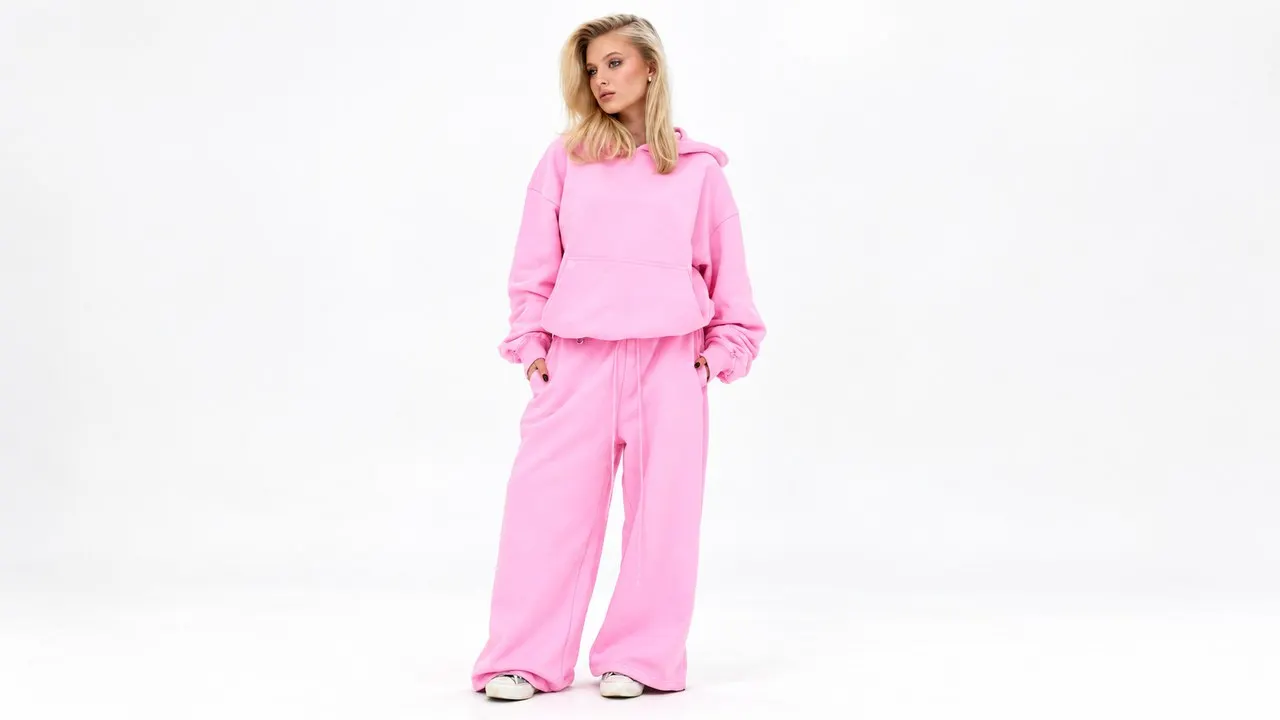
Custom team hoodies work when the garment, decoration, size plan, and delivery schedule all support the same use case. A club ordering warm layers for weekly training needs a different hoodie from a creator community selling a limited merch drop, even if both place the same artwork on the chest.
The expensive mistake is treating the hoodie as a blank canvas and approving the product from a digital mockup. Fabric weight affects warmth and shipping cost. The hood can interfere with back artwork. Rib stretch changes how a garment holds its shape, while a tight size mix can leave organizers with the wrong stock after sign-ups change. Buyers should therefore approve the hoodie as a complete wearable product, not as a logo attached to a generic sweatshirt.
What Should Custom Team Hoodies Be Designed to Do?
The first decision is the job the hoodie must perform. Buyers should define who will wear it, where it will be worn, how it will be distributed, and whether the order is an operational uniform, a commemorative item, or merchandise intended for resale. Those answers determine whether consistency, visual impact, individual personalization, or margin deserves priority.
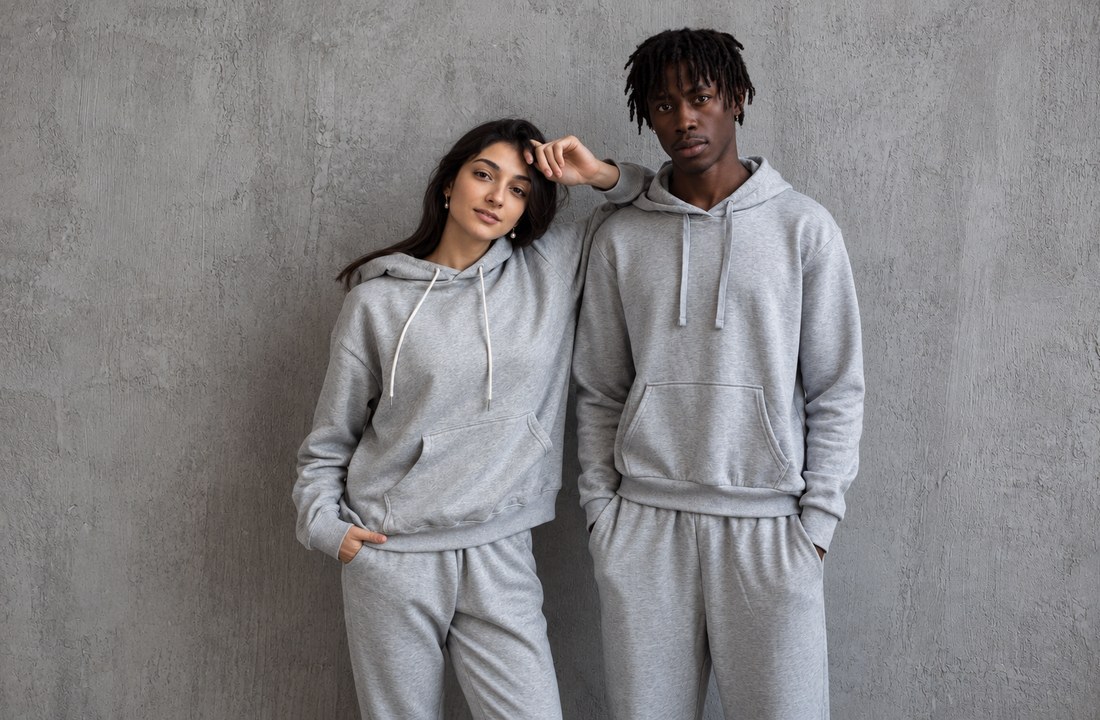
A training club may value easy layering, repeatable sizing, and a color that can be reordered. A campus society may care more about a deadline tied to orientation week and the ability to collect names and sizes before production. A paid community drop adds another requirement: the product must justify its retail price after decoration, packaging, transaction fees, and delivery are counted.
Separate the wearer from the buyer
The person approving the order may not be the person wearing it. Team managers often focus on budget and deadline, while wearers notice sleeve length, hood weight, pocket access, and whether the sweatshirt is comfortable over a T-shirt. A short wear questionnaire can expose those differences before a sample is selected. Ask about climate, indoor versus outdoor use, expected layering, preferred fit, and whether the garment will be washed after every event.
Do not turn this exercise into a popularity vote among dozens of styles. Establish a small set of pass/fail requirements first. For example, the hoodie may need a stable core color, inclusive sizing, a printable chest area, and a reorderable product code. Any option that fails one of those conditions should leave the shortlist even if its unit price is attractive.
Distribution changes the specification as well. A hoodie issued at one clubhouse can use a simple bulk pack, while an online community shipping to individual members needs SKU accuracy, address handling, parcel protection, tracking, and a plan for exchanges. If organizers will hand out garments at an event, each unit may need a name or size identifier that can be removed without marking the fabric. Confirm these operational details before selecting optional packaging.
Define ownership before designing graphics
Original community language, founding dates, city references, internal phrases, and self-created symbols give a team identity without borrowing protected assets. Permission should be documented before a buyer uses a school crest, league logo, sponsor mark, player name, or another organization’s artwork. A verbal assumption from one member is not a license.
For a broader framework covering multiple garment categories, the custom sports team apparel buying guide explains how product scope and intellectual-property boundaries fit together. The hoodie project should still keep its own artwork approval file showing who supplied each element and who authorized production.
How Do Fabric and Construction Change Hoodie Performance?
Fabric weight is useful only when read with fiber content, knit structure, inner surface, and intended climate. A heavier number does not automatically mean a better team hoodie, and two sweatshirts with similar GSM can feel different because one uses brushed fleece while another uses loopback French terry. Buyers need a physical sample and a written product identity, not a weight claim in isolation.
Brushed fleece traps more air at the inner face and usually feels warmer against the body. French terry has visible loops on the reverse and can suit transitional weather or active use where a less insulated feel is preferable. Blends may change softness, drying behavior, print response, and dimensional stability. CottonWorks notes that garment quality depends on fabric characteristics, fit, seam integrity, shrinkage, and other performance measures in its garment quality control guidance.
Inspect the parts that carry repeated stress
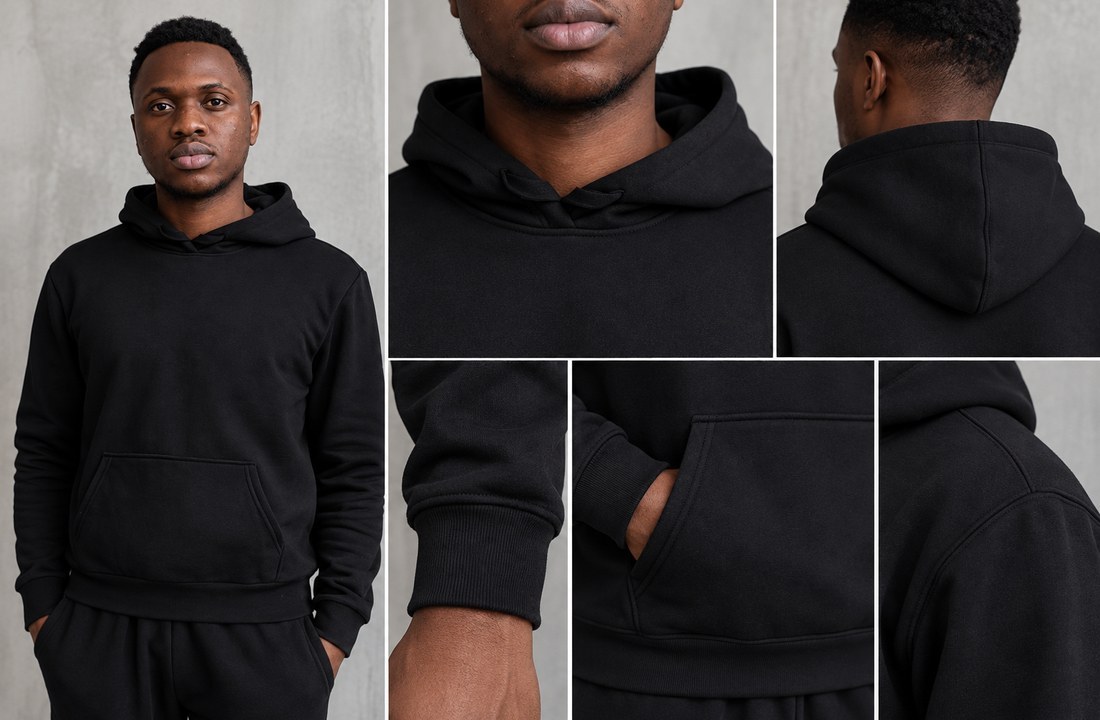
Look beyond hand feel. Check the shoulder seam, armhole, cuff recovery, waistband recovery, pocket corners, zipper insertion if applicable, drawcord channel, and the point where the hood joins the neckline. A team garment may be worn while carrying bags, sitting on buses, or moving equipment; weak pocket corners and loose rib can fail before the main fabric looks worn.
Wash the sample according to its care instruction and remeasure agreed points rather than judging it by eye. CottonWorks explains that dimensional change can be influenced by yarn, knit construction, wet processing, finishing, sewing, and garment care in its shrinkage and skewing reference. The practical lesson is to agree on a test method and acceptance limits for the actual garment instead of copying a generic shrinkage number.
For a heavyweight reference, Cloprod lists a 400GSM washed boxy fit hoodie with its available colors and size range. That specification may suit a streetwear-led club, but it can be too warm, too bulky, or too expensive to ship for another group. The sample should answer that question.
Color also needs physical approval. Dark garments can show lint, abrasion, or shade differences that are hard to see in product renders, while light colors can reveal show-through or stains from event use. Compare the selected color under indoor and daylight conditions, decorate the same color that will be ordered, and ask whether later units will come from the same product version. Do not approve black and assume a bright team color will behave identically.
Should a Team Choose a Pullover or Zip-Up Hoodie?
A pullover normally gives artwork more uninterrupted space and fewer components to inspect, while a zip-up provides ventilation and easier on-off use. Neither format is universally better. The correct choice depends on activity, layering, decoration placement, mobility, and how much complexity the order can tolerate.
The table below turns those differences into a practical first shortlist.
| Decision factor | Pullover hoodie | Zip-up hoodie | Buyer check |
|---|---|---|---|
| Front decoration | Large center area is available | Zipper divides the front | Place final-size artwork on a sample |
| Layering | Simple outer layer | Easier to open over uniforms | Test over the intended base garment |
| Temperature control | Less adjustable while worn | Can be opened during activity | Match format to venue and climate |
| Component risk | No zipper to source or inspect | Slider, tape, and alignment add checks | Operate and wash-test the zipper |
| Personalization | Chest, sleeve, and back remain options | Left and right chest need separate alignment | Approve a placement map by size |
This comparison does not settle fit. A boxy pullover can still restrict movement if the armhole or sleeve is wrong, and a zip-up can distort a graphic if the printer treats two front panels as one flat surface. Buyers should compare formats on the intended body range and with the intended design.
Accessibility and duty of care may influence the format. Some wearers find a pullover difficult to remove, while zippers can create pressure points or snag during certain activities. Drawcords may be unsuitable for some age groups or environments. The organizer should review the real activity and any venue rules instead of assuming one adult streetwear specification can serve children, staff, athletes, and supporters without changes.
Test fit as a system rather than one sample size
Approve at least the smallest, middle, and largest relevant sizes when the budget allows. A logo that looks centered on a medium can sit too close to the pocket on a smaller size or appear undersized on a larger one. Sleeve personalization also needs a size-aware rule because the usable area changes along the taper.
Use the size chart as a starting point, then record actual sample measurements and the wearer’s feedback. If members will layer over jerseys or workwear, conduct the fitting that way. A sample approved over a thin T-shirt does not prove comfort over the final uniform.
Which Decoration Method Fits the Artwork and Use Case?
Decoration should be selected after the hoodie and artwork are known. Embroidery can suit compact marks on stable areas, while printing can handle larger graphics and finer color variation. The wrong pairing can create puckering, excessive stiffness, lost detail, or a placement that collides with seams, pockets, and the hood.
Embroidery adds thread and backing to the garment. Dense files, very small lettering, and large filled areas can become heavy, so the artwork must be digitized and tested for the actual fabric. Printing also requires an actual strike-off or sample because ink coverage, underbase, transfer film, curing, and fabric surface affect the result. Do not approve either method only from a screen preview.
Build an artwork and placement map
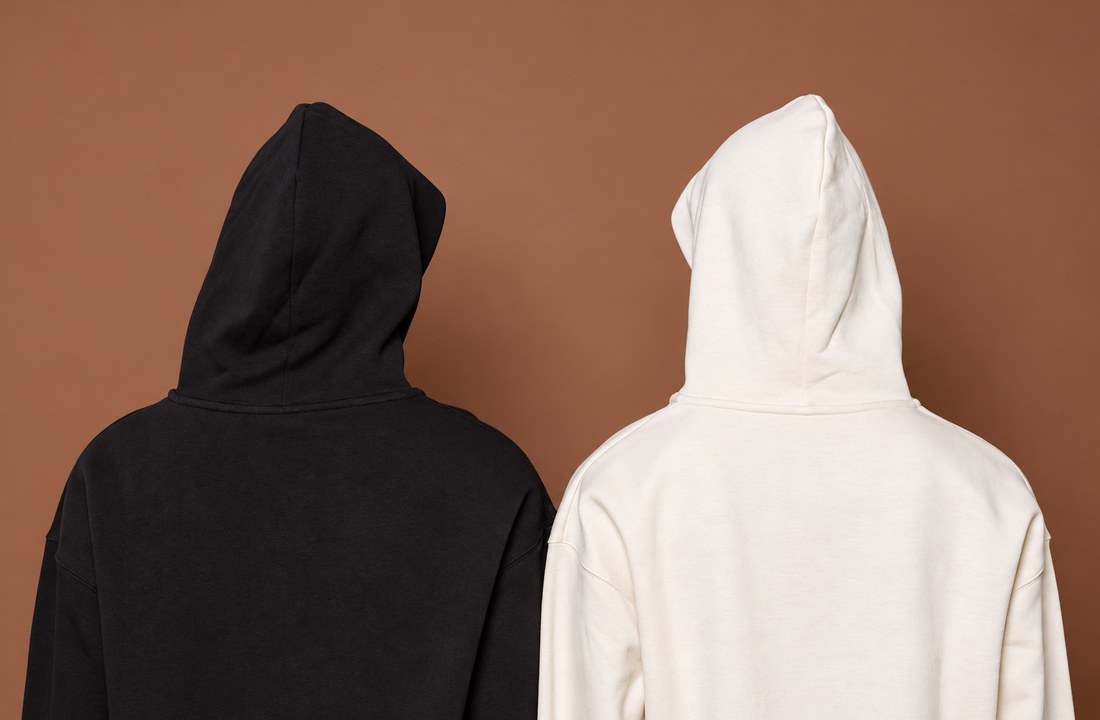
The map should show finished dimensions, distance from reference seams, color callouts, personalization rules, and which sizes require adjusted placement. Back artwork needs a hood-down check. Sleeve marks require a clear orientation. A chest design must be evaluated relative to the pocket and neckline rather than relative to the edges of a flat mockup.
Cloprod’s custom apparel options can be used to compare listed printing, embroidery, and branding paths. Treat the page as a capability starting point, then request confirmation for the selected hoodie, artwork, quantity, and finish. A method shown generally may still need a sample to prove compatibility with a particular fabric or placement.
Check the decorated sample after laundering as well as before it. CottonWorks’ quality testing overview identifies appearance, colorfastness, dimensional stability, and sampling conditions as separate parts of performance evaluation. A clean print on an unwashed sample does not answer whether the garment and decoration change together in use.
Approve thread and print colors against the garment, not against a monitor. Similar dark tones can disappear into washed fabric, and fine outlines may close during embroidery or lose clarity on a textured fleece surface. Ask for a real-size proof, record the approved color references, and photograph the sample only as supporting evidence. The physical sample remains the authority when screens and lighting show colors differently.
How Should Size Mix Quantity and Timing Be Planned?
Size mix, quantity, and timing should come from confirmed wearers or a defensible sales plan, not an evenly divided guess. Team orders concentrate risk in unpopular sizes, late name changes, missed event dates, and replacements that cannot be reproduced. The plan needs a cutoff, an approval owner, and a reorder route before production starts.
Freeze variable data before the production file is released
Collect names, numbers, sizes, and payment status in one controlled sheet. Set a deadline after which changes are treated as exceptions, and have one person approve the final file. Inconsistent capitalization, duplicate numbers, and last-minute nicknames are production issues, not merely administrative details.
Order quantity should be allocated by size and color, not discussed only as a total. For membership garments, confirm every wearer where practical and add only a deliberately chosen replacement buffer. For merchandise, use prior size sales or a small test rather than assuming the same distribution as another audience. If demand is uncertain, the Cloprod hoodie catalog can help narrow candidate products before money is committed to decoration.
Build the schedule backward from the true need date. Include product availability, sample delivery, artwork revision, member approval, production, inspection, packing, transit, and a contingency for rejected or missing units. “Event date” and “must arrive by” are not the same milestone; the goods need time for counting and issue resolution.
Design the reorder before the first order closes
Record the exact product code, color, size range, decoration file version, thread or print color, placement measurements, label treatment, and packaging instructions. Ask whether the garment is a stable style or a seasonal item. Reordering from a photograph can produce an obvious mismatch even when the graphic file is identical.
Compare the initial and reorder economics using the same cost scope. The custom apparel pricing page can provide a current reference for listed product and service costs, but buyers should still confirm what is included for the chosen order. Freight, individual name setup, labels, replacement units, and split delivery can change the landed cost.
Agree how errors will be handled before personalization begins. A misspelled name cannot usually be returned to general stock, and a wrong number may require a full replacement rather than a quick repair. The order owner should approve a locked variable-data file, and the supplier should confirm how that file maps to garments. Keep a small audit trail showing the source entry, approved display, and produced unit so disputes can be resolved without reconstructing the process from messages.
On receipt, count by size, color, and personalization before distribution. Pull representative units from different cartons and compare garment identity, measurements, decoration, labels, and packing with the approval record. Separate damaged or incorrect pieces so they do not enter the event handout. If the order will be mailed, test one packed parcel through the chosen service and confirm that tracking and recipient information remain accurate.
After the event or drop, record shortages, exchanges, unclaimed units, fit complaints, and requested replacements. That information should update the next size allocation and product choice. A reorder based only on the first total quantity repeats the original assumptions; a reorder based on actual wearer outcomes turns the first order into useful planning evidence.
Close the order with a short reconciliation. Compare ordered, received, issued, replaced, and remaining units by SKU, then record the final landed cost. This reveals whether personalization errors, express freight, or exchanges changed the budget and gives the next organizer a better starting point than the original quote.
Conclusion
Choose custom team hoodies by approving a complete use case, not by picking the cheapest sweatshirt and adding a logo. Start with wearer conditions and ownership of the artwork. Then compare fabric, inner surface, construction, pullover versus zip-up format, fit across the actual size range, and decoration on a physical sample.
Before production, submit the final artwork and order brief to the apparel team, including the placement map, hoodie product code, color and size allocation, personalization file, required arrival date, and branding instructions for written confirmation. Reject any plan that cannot preserve those details for a reorder. A clear specification makes it easier to compare quotations and prevents a visually acceptable sample from hiding size, schedule, or repeatability risk.
Keep the receipt and issue records so the next order starts from actual wearer evidence.
FAQ
What fabric is best for custom team hoodies?
There is no universal best fabric. Brushed fleece can suit colder, lower-activity use, while French terry may feel more appropriate in milder conditions. Compare fiber content, fabric weight, inner surface, recovery, shrinkage, print compatibility, and shipping weight on the actual sample.
Is embroidery or printing better for a team logo?
Embroidery can work well for compact marks on stable areas; printing can suit larger or more detailed artwork. Final size, stitch density, fabric surface, placement, color count, and wearer comfort should decide the method. Test the production-ready file on the selected hoodie.
How many hoodies should a club order?
Use confirmed member sizes for issue garments and evidence from previous sales or a small test for merchandise. Add replacement stock only for a defined reason. A total quantity without a size-and-color allocation is not a complete order plan.
How early should a team start sampling?
Start early enough to receive, wear, wash, measure, revise, and approve the decorated sample before production and transit. The exact schedule depends on product availability, artwork, personalization, quantity, destination, and the consequences of missing the event.
Can a team reorder the same hoodie later?
Only if the product and decoration inputs remain available and the supplier can reproduce the approved specification. Keep the product code, color, size chart, artwork version, placement measurements, decoration settings, and packaging instructions, and confirm availability before promising replacements.


