

A clothing manufacturer supplier decision should begin with the work your brand needs done, not with the label a company uses on its website. A factory that builds garments from patterns, an in-stock blank supplier, a decoration partner, and a print-on-demand operator may all describe themselves as apparel suppliers, yet they control different parts of the product and require different commitments from the buyer.
Choosing the wrong operating model creates predictable problems. A founder may ask a blank supplier to change a pattern it does not own, or expect a manufacturer to ship single ecommerce orders without a fulfillment system. Another buyer may pay for development work even though an existing garment and reliable decoration would have met the product brief. The correct partner is the one whose control boundary matches the product, inventory, branding, and delivery decisions the brand is ready to own.
What Does Each Apparel Partner Actually Control?
A manufacturer controls garment-making activities within an agreed production scope, while a supplier may only source or resell existing goods. A custom apparel partner usually combines available garments with decoration and brand finishing. A POD and fulfillment partner adds an order trigger and parcel shipment, but may offer less control over the base garment. Buyers should map those boundaries before comparing quotations.
Names are unreliable because businesses use manufacturer, vendor, supplier, factory, and production partner loosely. Ask for an operating description instead: Who owns the base style? Who buys the fabric? Who cuts and sews? Who decorates? Who holds stock? Who packs and ships the consumer parcel? Which changes require a new development cycle?
Manufacturer and full product development
A garment manufacturer may work from a tech pack, pattern, measurement specification, bill of materials, and approved samples. Depending on the arrangement, the buyer may need to supply some of those inputs or approve sourcing proposed by the factory. This route offers deeper control over fit and construction, but it also creates more decisions, sample rounds, material commitments, and change risk.
Do not assume every factory offers full-package product development. Some are cut-make-trim operations and expect the buyer to provide patterns, fabric, trims, and technical direction. Shopify’s overview of apparel production paths distinguishes domestic and overseas cut-and-sew, private-label blocks, print on demand, and dropshipping, illustrating why the production model must be identified before a brand asks for a quote.
Supplier customizer and POD operator
An in-stock clothing supplier gives buyers access to existing products, colors, sizes, and replenishment terms. A decoration partner may add printing or embroidery, while a custom apparel partner may also coordinate labels and packaging. These models can shorten development because the blank already exists, but the buyer cannot assume control over its pattern, fabric recipe, or long-term availability.
POD adds production after an order is received and may connect to a store for fulfillment. Shopify defines print on demand as production triggered by a customer order, which helps separate the inventory model from the level of garment customization. A supplier can offer POD on existing products without becoming a cut-and-sew manufacturer.
Logistics providers form another boundary. A warehouse can receive finished goods, count them, store inventory, and ship orders without controlling the garment or decoration. Some production partners coordinate those services, while others hand over cartons at the factory or freight terminal. Buyers should ask who owns each handoff and which system is the source of truth for inventory, because “we handle fulfillment” can mean anything from preparing a bulk carton to managing consumer returns.
How Should Buyers Compare Control and Commitment?
Buyers should compare partners using the same project brief and the same cost boundary. The central trade-off is usually between deeper product control and lower upfront inventory commitment, but speed, sample evidence, brand finishing, fulfillment, and reorder repeatability also matter. A low unit quote is not comparable if it excludes development, decoration, packaging, or delivery included elsewhere.

The following table provides a starting framework. Actual services must still be confirmed with each company.
| Partner model | Typical buyer control | Inventory commitment | Main evidence to request | Common mismatch |
|---|---|---|---|---|
| Garment manufacturer | Pattern, fabric, construction, trims | Often tied to material and production minimums | Tech-pack response, development plan, approved samples | Buyer lacks complete specifications |
| Existing clothing supplier | Selection from available styles | Depends on stock and terms | Product identity, size data, availability policy | Buyer expects pattern changes |
| Custom apparel partner | Existing garment plus decoration and selected branding | Can range from samples to batches | Decorated sample, method limits, packing scope | Branding assumptions exceed written capability |
| POD and fulfillment partner | Artwork and listed product choices | Production may follow each sale | Integration test, order routing, sample parcel | Buyer expects wholesale economics or deep garment control |
The table is not a ranking. A young graphic brand may rationally accept limited pattern control to validate designs without holding stock. A label built around a proprietary silhouette cannot make the same compromise because the garment itself is the product difference.
Compare the control boundary in writing
Mark every requirement as supplier-controlled, buyer-controlled, shared, or unavailable. Include fabric identity, measurements, artwork preparation, decoration settings, labels, packaging, inventory ownership, quality checks, freight, returns, and reorder records. Unassigned work is where schedule disputes tend to begin.
Add an evidence column to that map. Product control may be demonstrated by a versioned specification and approved sample; fulfillment control may need an actual test order and tracking record; inventory control may need a current stock policy and reconciliation report. This prevents the team from accepting a verbal “yes” for every capability while holding no proof that the separate services work together.
Private label also needs a clear definition. Shopify describes private-label products as goods made by a third party and sold under the retailer’s brand, but the depth of changes varies by category and supplier. A neck label on an existing blank is not the same development scope as custom fabric, pattern, wash, and trims.
When Is an Existing Garment Supplier the Better Choice?
An existing garment supplier is often the better choice when the brand’s differentiation comes mainly from artwork, curation, community, or speed rather than proprietary garment engineering. It is also useful when demand is unproven and the buyer needs samples or small tests before making a fabric or production commitment.
The limitation is product ownership. The supplier may change stock, discontinue a color, update a size specification, or substitute a revised version. Buyers should record the exact SKU and ask how changes are communicated. A catalog photograph and a generic phrase such as heavyweight T-shirt are not enough to reproduce a reorder.
Match the blank to the selling promise
Inspect fit, measurement variance, fabric surface, collar or rib recovery, seam condition, shade consistency, and laundering response. If the brand promises a structured oversized shirt, a soft standard retail blank is a poor match even when the graphic prints well. The sample needs to be worn and washed by someone who understands the intended silhouette.
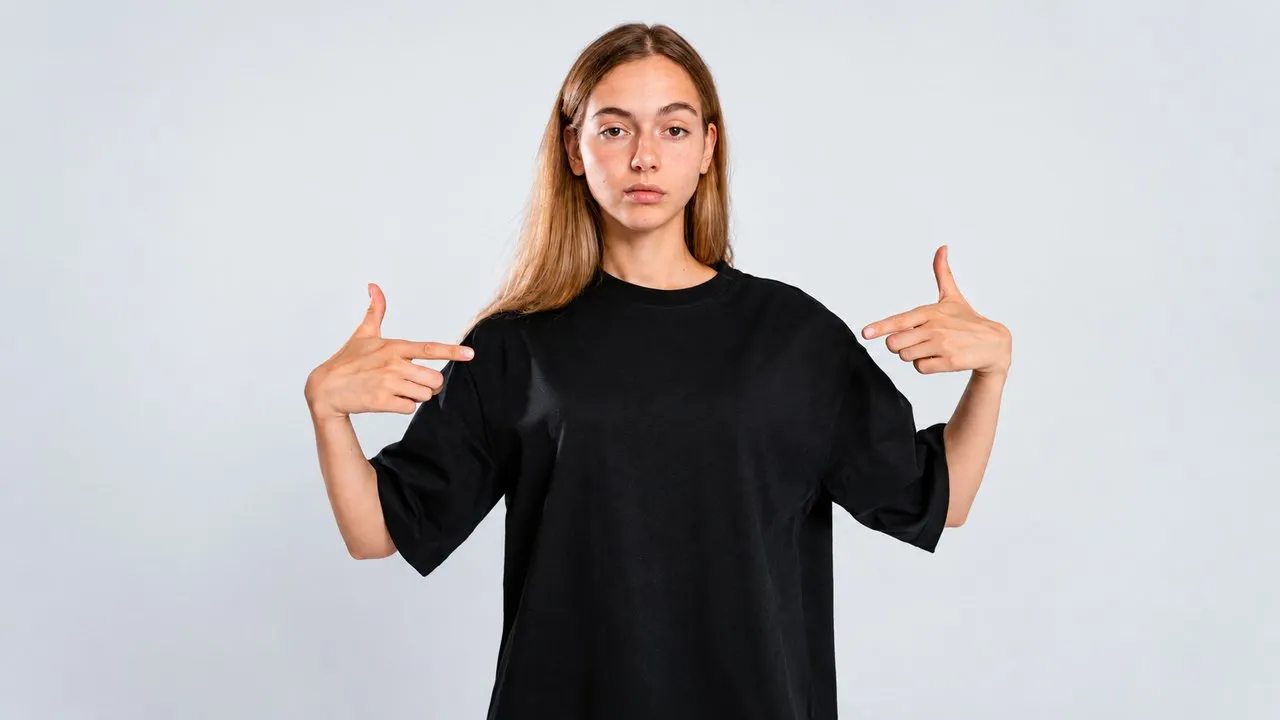
The Cloprod apparel catalog can be used to narrow existing products by category before decoration. For example, a listed 285GSM oversized unisex T-shirt represents a specific product option, not a general statement about all premium tees. Buyers should verify its current colors, sizes, availability, and suitability for the intended artwork.
An existing-garment route is not suitable when the brand must own a unique pattern, exclusive fabric, proprietary trim, or construction detail unavailable in the catalog. Trying to force those needs into a blank-based program often produces endless exceptions and an unclear product identity.
It is also a poor choice when the selling claim depends on material traceability or performance data the supplier cannot connect to the exact SKU. A generic fabric description does not support a precise technical promise. If the brand needs a certified fiber input, controlled dye lot, laboratory threshold, or market-specific protective function, confirm the documentation and product linkage before selecting the operating model.
When Does a Brand Need a Clothing Manufacturer?
A brand needs a manufacturer when its essential product requirements cannot be achieved through available garments and decoration. Proprietary fit, custom pattern pieces, engineered pockets, special washes, unique materials, or construction-led design generally require a development and manufacturing path. The buyer must be ready to manage more technical inputs and commercial commitments.

Prepare specifications before contacting factories
A useful request includes technical drawings, points of measure, size grading, construction details, fabric performance needs, color standards, trims, labels, packaging, target quantity, destination, and required date. If some items are open, mark them as decisions for development rather than leaving the factory to guess.
Ask how the company handles patterns, material sourcing, sample stages, testing, approvals, production inspection, nonconforming units, and change control. The answer should describe a process tied to the proposed product. Generic assurances about quality or experience do not prove the factory can build this garment.
CottonWorks explains that fabric quality, fit, seam integrity, shrinkage, and performance all contribute to garment quality control. That supports a practical rule: approval should cover the material and the constructed garment. A correct measurement chart cannot compensate for fabric that changes unexpectedly, and good fabric cannot correct an inaccurate pattern.
Manufacturing is unsuitable when the brief is still a loose mood board and the brand cannot fund or manage iteration. In that stage, testing graphics and positioning on an existing garment may produce better evidence than negotiating a custom product that has no verified demand.
The buyer also needs internal ownership. Someone must consolidate design comments, approve measurement changes, decide when a sample passes, and control the latest files. A factory cannot compensate for contradictory instructions from founders, designers, and marketers. Establish one approval route and a decision log before development begins, particularly when a sample failure changes cost or timing.
Can One Partner Support Both Testing and Scaling?
One partner can support testing and scaling only if its documented services cover both stages without changing the product beyond the brand’s acceptance limits. Buyers should not infer a bulk path from a POD offer or infer single-order fulfillment from a bulk customization page. The transition must be tested as a separate operating process.

Separate product continuity from service continuity
A brand may test a graphic through POD and later move to bulk decoration, but the bulk garment may not be identical to the POD product. Before promising continuity, compare SKU, fabric, measurements, color, decoration method, print dimensions, labels, and packaging. If any change is intentional, update product photography and customer information instead of treating it as an invisible operational switch.
Cloprod’s how it works page describes the listed store connection and order flow, while its custom apparel page presents decoration and brand-finishing options. These pages can establish whether a catalog-based test and later custom order deserve a discussion, but they do not prove full OEM or proprietary cut-and-sew capability. The project brief should stay within the confirmed service boundary.
Economics should be compared at the order level. The Cloprod pricing page can provide current listed costs for relevant options, but the buyer still needs a project quotation that identifies garment, decoration, labels, packing, freight, duties where applicable, platform charges, and replacement handling. A lower production cost can be offset by inventory carrying cost or parcel fulfillment expense.
Run a controlled pilot before migrating live volume. Place a sample order through the actual store route, inspect the product and parcel, verify tracking and customer notifications, and reconcile the transaction. For bulk, approve a production-representative sample and the inspection plan. Success in one route does not validate the other.
Customer service must be included in the pilot. Test how the partner responds to an invalid address, a canceled order, a damaged parcel, a defect, and a size exchange. Record which party pays and which evidence is required. A partner can produce an acceptable garment and still be the wrong operational choice if exception handling creates delays or manual work that the brand cannot sustain.
How Should the Final Partner Decision Be Made?
The final decision should be based on the smallest operating model that can deliver the product promise with acceptable risk. Start with non-negotiable product requirements, then exclude partner types that cannot control them. Compare the remaining options using samples, written scope, landed economics, timeline, fulfillment responsibilities, and reorder evidence.
Apply rejection conditions before scoring preferences.
Reject a candidate if it cannot identify the proposed product, refuses a meaningful sample, leaves essential responsibilities unassigned, or cannot explain how an approved specification reaches production. Also reject a model that requires inventory or development commitments the brand cannot absorb, even if the sample is attractive.
Only then score desirable factors such as communication speed, range, brand finishing, geographic convenience, and future capacity. This order prevents a polished sales process from outweighing a basic scope mismatch. Shopify’s manufacturing guidance recommends defining requirements, evaluating manufacturers, and requesting samples before committing to production in its product manufacturing overview.
Keep the decision record. It should state why the chosen model fits this launch, which limitations the brand accepts, what evidence was reviewed, what remains to be tested, and what trigger would justify moving to a different model. A partner can be right for the current collection without being the permanent answer for every future product.
Plan the handoff if a future product needs another model. Preserve artwork, product identity, measurements, test results, customer feedback, costs, and fulfillment data in formats the brand controls. A startup that leaves every record inside one supplier’s portal may struggle to compare alternatives or reproduce the product later. Portability does not mean copying proprietary factory information; it means retaining the buyer’s own specifications and approvals.
Review the choice after the pilot using the same criteria used at selection. If the product, cost, timeline, or exception handling failed, identify whether the problem came from the partner, the model, or the buyer’s inputs before replacing the supplier.
Conclusion
The clothing manufacturer supplier choice is a scope decision before it is a vendor decision. Define whether the brand needs a proprietary garment, an available product, decoration and branding, production after each sale, parcel fulfillment, or a combination that the partner explicitly supports.
Send the apparel team a complete product brief with artwork, garment requirements, quantity scenario, branding details, destination, and target delivery date. Request samples and written responsibility boundaries, then compare landed cost and reorder continuity on that common basis. If the garment itself must be unique, use a manufacturing path and prepare for development. If artwork and market testing lead the offer, an existing product with controlled customization may be the more disciplined first step.
Reassess the model when the product promise or verified demand changes.
FAQ
Is a clothing supplier the same as a manufacturer?
Not necessarily. A manufacturer makes products within a defined production scope, while a supplier may source, stock, resell, decorate, or fulfill products made elsewhere. Ask which production steps the company owns and which it outsources.
Can a custom apparel supplier change a garment pattern?
Only if pattern development and garment manufacturing are confirmed parts of its service. Many custom apparel programs decorate existing products. A label, print, or package change does not prove control over fit, fabric, or construction.
Is print on demand a manufacturing method?
POD describes when production is triggered, usually after a customer order. It does not by itself specify how deeply the garment can be customized. Many POD programs use existing products and apply artwork on demand.
What should buyers compare besides unit price?
Compare development charges, samples, garment and decoration scope, labels, packaging, minimum commitments, inspection, freight, fulfillment, replacement handling, inventory risk, and reorder continuity. Use the same specification and delivery basis for every quotation.
When should a brand move from blanks to custom manufacturing?
Move when a verified product requirement cannot be achieved with existing garments and the expected demand justifies development and inventory exposure. Proprietary fit, fabric, construction, or wash can be valid triggers, but they need a technical brief and sample budget.